
Professional wallpaper installation in Seattle follows a set sequence: consultation, measuring, room protection, wall prep, priming, layout, hanging with careful pattern matching, trimming, cleanup and a final walkthrough. A single room often takes one to two days once materials are on site, and wall condition is the biggest factor in how long a job takes. WallpaperCraft Pro, based in Bellevue, WA, handles every step for homes and businesses across Seattle and the Eastside, from old paper removal and skim coating to grasscloth and murals.
Key takeaways
- Good wallpaper installation is mostly preparation. Smooth, sound, primed walls matter more than anything else.
- Roll counts depend on wall area, pattern repeat and match type, so order everything from the same production run and include extra.
- Older Seattle homes often have plaster walls that need repair, while newer Eastside homes usually have drywall that needs sealing and priming.
- A wallcovering-specific primer and the manufacturer's paste and booking instructions are essential for a lasting result.
- Homeowners can speed things up by clearing the room, confirming the order and planning around humid rooms.
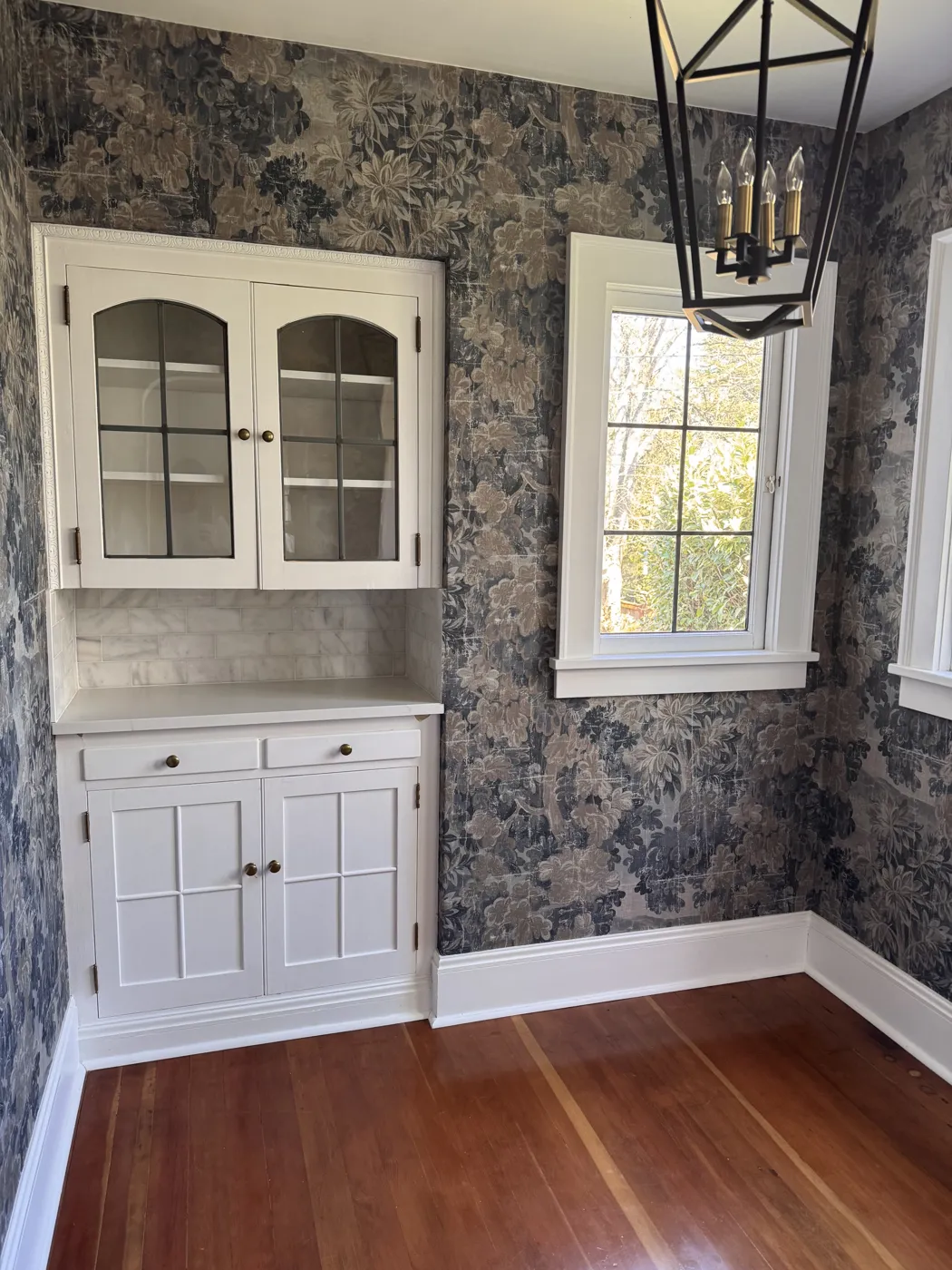
This guide walks through each stage of a professional job, from your first call to the finished room, plus typical timelines, materials, how to prepare, and when to hire a pro instead of doing it yourself.
What does professional wallpaper installation in Seattle involve?
A professional install is a sequence, and each step depends on the one before it. Skipping prep or rushing layout leads to open seams, bubbles and patterns that drift off level. Here is the process step by step.
- Consultation. The installer looks at the room, the walls and the paper you've chosen (or are considering). They'll ask about the look you want and your deadline, and check wall condition.
- Measuring and roll calculation. Every wall is measured, and openings like doors and windows are noted. The installer then works out how many rolls you need from the roll dimensions, the pattern repeat and the match type. Large repeats create more waste.
- Room protection. Floors get drop cloths, furniture is moved or covered, and outlet and switch covers come off.
- Wall prep. Old wallpaper is removed if needed, holes and cracks are filled, and rough areas are sanded. Walls with heavy texture or damage may need a skim coat to get a smooth surface.
- Priming. A primer made for wallcoverings goes on next. It seals the surface, improves adhesion and makes future removal easier.
- Layout and plumb lines. Walls and corners are rarely perfectly straight, so the installer marks a true vertical plumb line and plans where seams will land. The goal is to avoid narrow slivers at corners and hide the final seam somewhere discreet.
- Hanging and pattern matching. Panels are cut, pasted (or the wall is pasted, for paste-the-wall products), booked or relaxed according to the manufacturer's instructions, and hung. Each strip is matched to the one beside it.
- Trimming. Excess paper is trimmed at the ceiling, baseboards, casings and outlets with blades changed often to avoid tearing wet paper.
- Cleanup. Paste is wiped from the surface, trim and ceiling, covers are reinstalled, debris is removed and furniture goes back.
- Final walkthrough. You and the installer review the room together in good light, checking seams and alignment and going over care for your paper.
How does pattern matching work?
Most patterned papers use one of three match types. A straight match lines up the design horizontally across every strip. A half-drop match repeats the design on every other strip, offset by half the repeat, which typically uses more paper. A random match has no alignment requirement, so it creates the least waste. Heavy commercial vinyls and some grasscloths are often joined with a double-cut seam: two overlapping panels are cut through together and the excess removed, with care taken not to score the wall underneath. For repeat lengths and roll math, see wallpaper pattern matching explained.
Why does wall prep matter so much in Seattle homes?
Wall prep matters because wallpaper shows every crack and ridge beneath it, and it can only bond as well as the surface it sits on. Seattle-area housing makes this especially important. Many older homes in Seattle and Shoreline have plaster walls with hairline cracks, loose patches or layers of old paint and paper. Newer construction in Sammamish, Redmond and Issaquah usually has drywall, often with a light texture, which may need smoothing and must be sealed so the paper doesn't bond directly to the drywall's paper face.
Our damp climate also means bathrooms and laundry rooms need good ventilation and the right paper and adhesive; see our guide to wallpaper for bathrooms and humid rooms. For repairs, skim coats and primer choices, read wall preparation for wallpaper.
How long does wallpaper installation take?
Most single rooms take one to two days of hanging, and an accent wall in good condition can often be done in a day. Prep, drying time and the material itself stretch the schedule from there. As a general guide:
- A single accent wall can often be finished in a day when walls are in good shape.
- A standard bedroom, dining room or powder room often takes one to two days.
- Rooms needing removal or a skim coat take longer, since compound and primer need drying time before hanging.
- Grasscloth, silk, murals and large commercial spaces take more time because of careful handling, panel sequencing or after-hours scheduling.
Lead time for the paper itself is separate. Designer papers can take a while to arrive, so it's smart to order early.
What materials and tools does a wallpaper installer use?
A typical job uses patching compound, a wallcovering primer, an adhesive matched to the paper, and precise layout and cutting tools.
| Material | What it does |
|---|---|
| Joint compound / patching material | Fills holes, cracks and dents; used for skim coating rough walls |
| Wallcovering primer | Seals the wall, improves adhesion and makes future removal easier |
| Adhesive (paste) | Chosen to suit the paper type and weight, per manufacturer guidance |
| Wallcovering | Traditional paper, non-woven, vinyl, grasscloth, silk or mural panels |
| Tools | Levels or lasers, smoothing brushes, seam rollers, straightedges, sharp blades |
For commercial projects, vinyl is often classed by durability. Type I is a lighter-duty vinyl for areas with less traffic, while Type II is heavier and suits busier spaces like corridors and lobbies. The right class depends on how much wear the walls will take.
How should homeowners prepare for installation day?
The most useful things you can do are confirm your order, clear the walls and furniture, and share access details ahead of time.
- Confirm the order. Check that all rolls share the same batch or lot number. Different runs can vary slightly in color.
- Don't open or cut rolls. Leave them sealed until your installer has inspected them, which helps if a return is needed.
- Clear the room. Remove artwork, mirrors, shelves and small items, and move furniture toward the center if you can.
- Plan access. Let the installer know about parking, pets, building rules or elevator bookings—important for Seattle and Bellevue condos.
- Keep conditions steady. Moderate temperature and humidity help paste cure evenly.
Should you hire a pro or DIY your wallpaper installation?
DIY can work for a small, simple project, such as a random-match or peel-and-stick paper on a smooth, already primed accent wall. A professional installer is usually the better choice when:
- The paper has a large repeat or a half-drop match.
- You're using grasscloth, silk or other designer papers that are expensive and unforgiving.
- The project is a mural, where panel order and alignment are critical.
- Walls need old paper removed, plaster repair or skim coating.
- The room is a stairwell, has high ceilings or is commercial space with after-hours needs.
If you're comparing contractors, our guide on how to choose a wallpaper installer lists the questions to ask, and our page on hiring a wallpaper installer in Seattle covers older city homes and condos.
What affects the cost of wallpaper installation?
The main cost factors are wall area and number of rolls, pattern repeat and match type, wall condition, material type, whether removal or prep is needed, ceiling height and access, and, for businesses, scheduling outside normal hours. The only reliable number is a written estimate based on your actual room. Our guide to wallpaper installation cost factors explains each one.
Frequently asked questions
How many rolls of wallpaper do I need?
It depends on your wall measurements, the roll size, the pattern repeat and the match type. Large repeats and half-drop matches create more waste, so they need more rolls. A professional installer can measure the room and calculate an accurate quantity, and ordering a little extra from the same production run helps cover future repairs.
Can wallpaper go over textured walls?
Light texture can sometimes be covered, but heavier texture usually shows through and weakens adhesion. The common fix is a skim coat of joint compound, sanded smooth and then primed with a wallcovering primer. An installer can look at your walls and tell you whether a skim coat is needed before hanging.
Do I need to remove old wallpaper before installing new wallpaper?
In most cases, yes. Hanging over old paper risks bubbles, seams showing through and poor adhesion, especially if the old layer is loose. Removing it, repairing the wall underneath and priming gives the new paper a sound, smooth surface. Our wallpaper removal guide explains the process in more detail.
Is wallpaper a good choice for bathrooms in Seattle?
It can be, with the right approach. Good ventilation, a suitable paper such as a vinyl or other moisture-tolerant option, proper primer and the correct adhesive all help it hold up in humid rooms. Running the exhaust fan during and after showers also makes a big difference in the Pacific Northwest climate.
Which areas do you serve for wallpaper installation?
WallpaperCraft Pro is based in Bellevue, WA, and serves 22 cities from Everett to Tacoma, including Seattle, Bellevue, Kirkland, Redmond, Sammamish, Issaquah, Mercer Island and Bothell. We handle residential and commercial wallpaper installation, wallpaper removal and wall prep. See our full list of service areas for every city we cover.
How soon can I get a quote?
WallpaperCraft Pro offers free estimates and replies to quote requests within 24 hours. Call (213) 645-9101 or use the quote form, and share your location, the walls you want covered, photos if you have them, and details about your chosen paper. That helps us give you a clear, written estimate based on your actual project.
Ready to plan your wallpaper installation?
WallpaperCraft Pro, based in Bellevue, WA, handles residential and commercial wallpaper installation in Seattle and across the Eastside, from wall prep to the final walkthrough. Request a free estimate, call (213) 645-9101 or visit wallpapercraftpro.com. We reply to every quote request within 24 hours.