
Mural wallpaper installation starts with accurate wall measurements and an order that includes bleed, a few inches of extra image on every edge so the design can be trimmed to uneven walls and ceilings. The installer dry-lays the numbered panels, sets a plumb line tied to the focal point, and hangs each panel on a smooth, primed wall with tight, image-matched seams. WallpaperCraft Pro, based in Bellevue, WA, installs murals and accent walls in homes and businesses across Seattle and the Puget Sound.
Key takeaways
- Measure at several points and order your mural with a few inches of bleed on every side.
- Dry-lay the numbered panels before pasting so you catch print or sequence problems early.
- Decide where the focal point should land before you hang the first panel.
- Mural seams must match the picture as well as meet tightly, whether butt-joined or double-cut.
- Peel-and-stick suits renters and small spaces. Pasted murals last longer on large, busy, or commercial walls.
What makes mural wallpaper installation different?
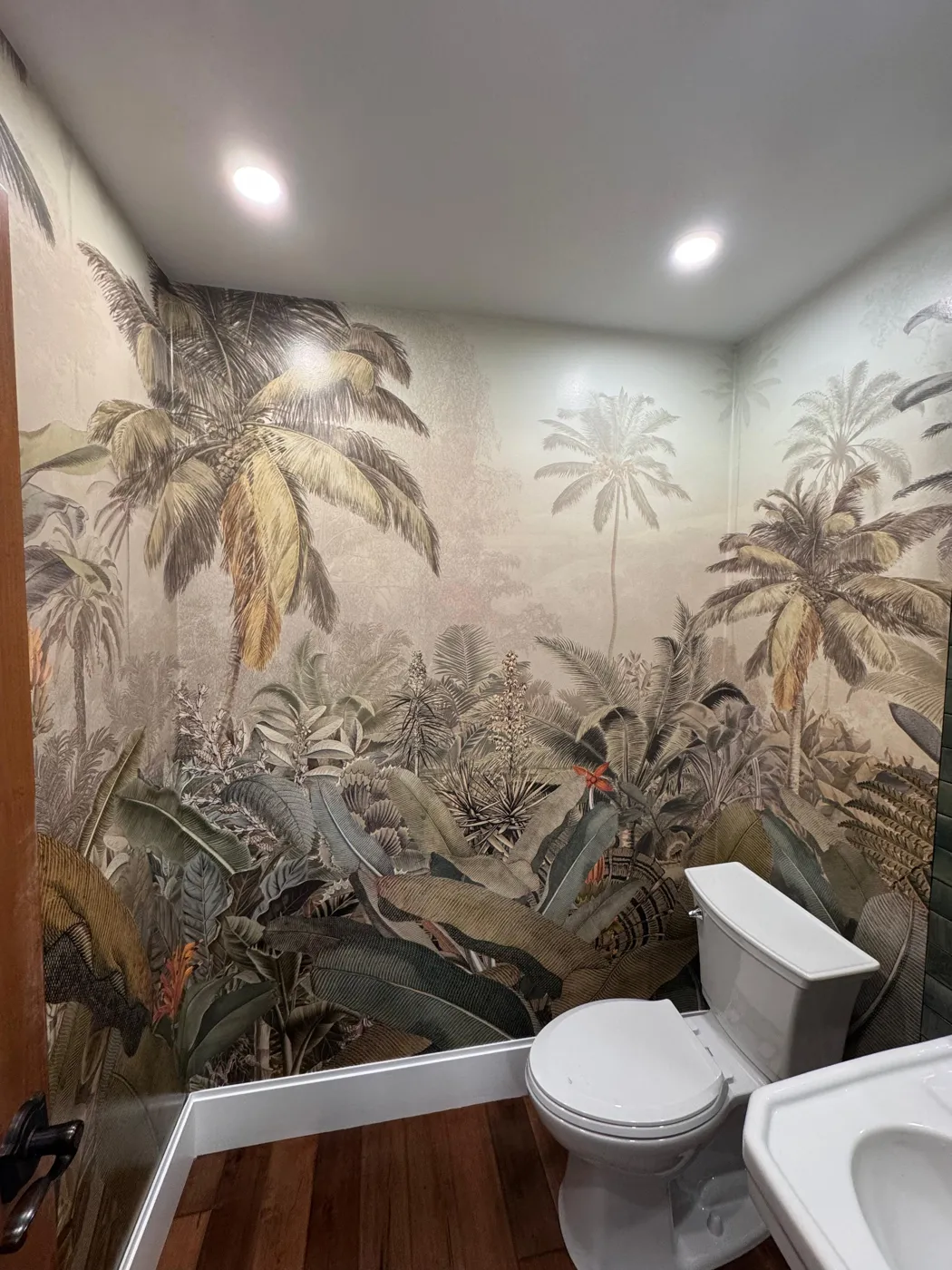
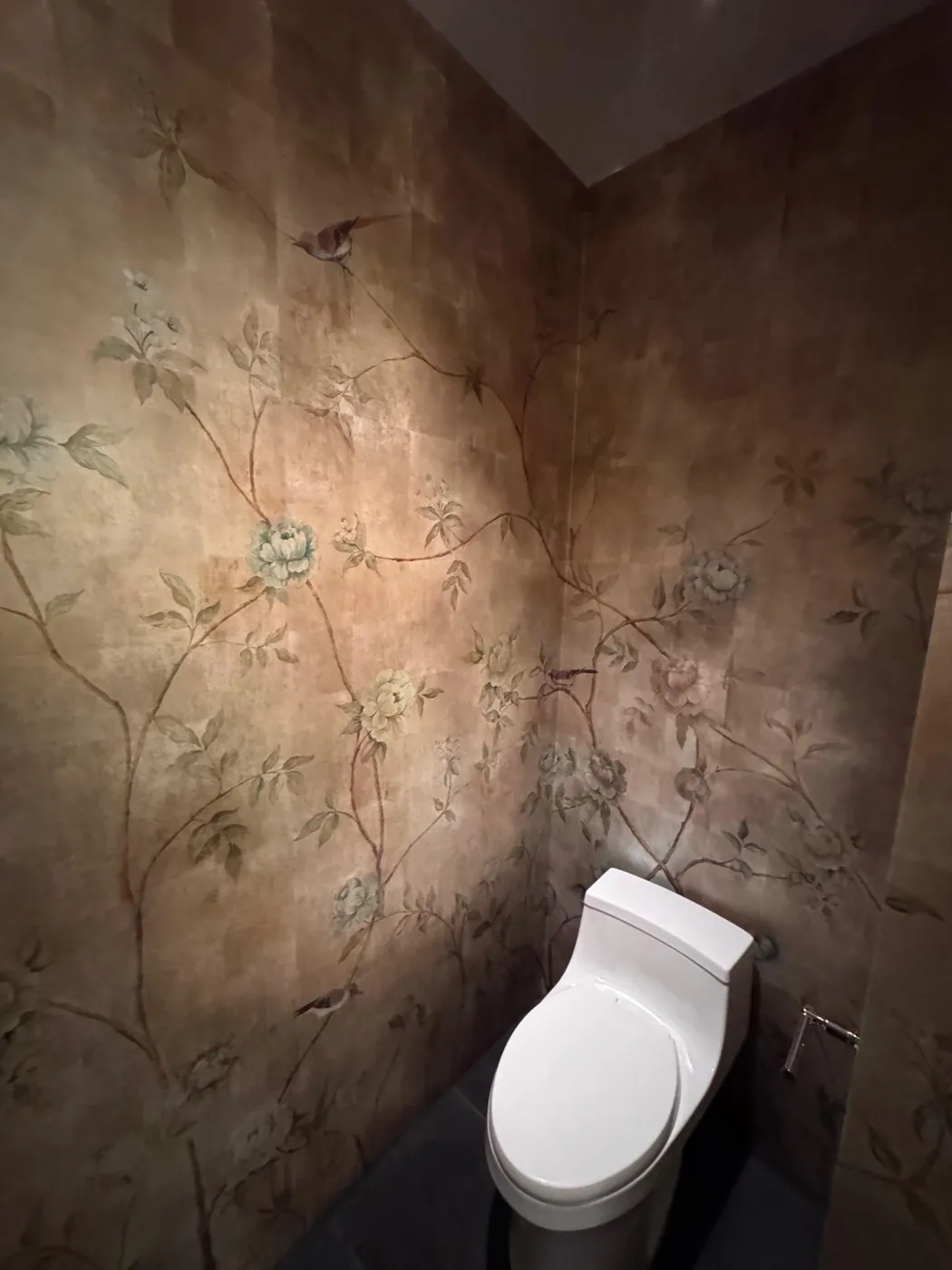
A mural is one continuous picture, so every panel has a single correct position and small measuring or alignment errors show far more than with repeating wallpaper. Patterned wallpaper repeats (see our guide to wallpaper pattern matching), so losing an inch at the ceiling barely shows. With a mural, if the first strip goes up out of plumb or off-center, the error carries across the whole wall. You could end up with a mountain peak cut off at the ceiling or a face split by a light switch. That's why installers do most of the planning before hanging anything, whether the job is an accent wall in a Bellevue living room, a forest scene in a Sammamish nursery, or a branded mural in a Seattle restaurant.
How do you measure a wall for a mural and order with bleed?
Measure the width of the wall at the top, middle, and bottom. Measure the height at the left, center, and right. Use the largest numbers, because walls are rarely square, especially in older Seattle homes with plaster. Then add bleed: extra image that gets trimmed off during installation.
- How much bleed? Many mural makers suggest adding a few inches to both width and height. Follow the specific manufacturer's guidance, since some build bleed in automatically and others expect you to add it.
- Uneven ceilings and floors: Bleed lets the installer trim to a wavy ceiling or uneven baseboard without losing key parts of the image.
- Custom sizing: Made-to-order murals can't be stretched later, so double-check before ordering.
Unsure of your numbers? An installer can measure on site as part of a free estimate visit.
How are mural panels numbered and laid out?
Printed murals usually arrive as vertical panels numbered in hanging order. Before mixing paste, an installer will:
- Unroll every panel and confirm the count and numbering match the layout sheet.
- Lay the panels side by side in order to check that the image lines up across each seam.
- Look for print defects, color shifts, or damage while the panels can still be returned or reprinted.
- Mark each panel's top, since abstract images are easy to hang upside down.
How do you center the focal point of a wall mural?
Center a mural by deciding where its focal point should land and starting from a plumb line through that spot, not from a corner. The focal point might be a horizon, a tree, or a skyline:
- Decide where the focal point should sit: centered on the wall, or over a bed, sofa, booth, or reception desk.
- Find the panel that carries the focal point and mark a matching plumb line with a laser level.
- Check the vertical position as well. Make sure a horizon won't sit behind a headboard or a key detail won't get trimmed at the ceiling.
How are seams handled on wall murals?
A mural seam must be tight and flat, and the picture must line up across it. The method depends on the product:
- Butt-joined panels: Factory-trimmed edges meet edge to edge, common with non-woven murals.
- Overlap panels: The installer overlaps panels, double-cuts through both layers with a straightedge and fresh blade, and removes the excess.
- Peel-and-stick panels: These usually overlap slightly and must not be stretched, or the alignment drifts.
Whatever the method, start with a smooth wall sealed with wallcovering primer, and follow the manufacturer's paste and booking instructions. Seams open up on porous, dusty, or patchy walls. Our guide to wall prep before wallpaper goes into more detail.
Where do wall murals and accent walls work best?
Murals work best on one uninterrupted wall that people see first, with few windows, doors, or outlets breaking up the image.
Nurseries and kids' rooms
Soft landscapes, animals, maps, and night skies are popular in nurseries and kids' rooms in Kirkland and Redmond. Choose a washable material, and plan the layout so furniture doesn't hide the main characters. A paste-the-wall non-woven mural is a good choice, because it usually strips off in large pieces once the child outgrows the theme. Our nursery wallpaper installation guide covers low-odor materials and timing.
Living rooms and bedrooms
Accent wall wallpaper usually goes behind the sofa, TV, or bed. Large botanicals, misty forests, and abstract washes suit the Pacific Northwest's soft light. Check how the image reads from the doorway as well as from the seating.
Restaurants, cafes, and retail
Commercial murals are often custom artwork or branding and need durable, cleanable materials such as Type II vinyl in high-traffic areas. Restaurants in Seattle and Tacoma often need after-hours installation so service isn't interrupted. See our commercial wallpaper installation guide for scheduling and material details.
Peel-and-stick vs. pasted murals: which should you choose?
Choose peel-and-stick for small, short-term or rental walls, and a pasted mural for large, long-term, humid, or commercial walls.
| Factor | Peel-and-stick mural | Pasted mural (non-woven or vinyl) |
|---|---|---|
| Best for | Renters, small accent areas, short-term décor | Long-term residential and commercial walls |
| Adhesion | Depends on the wall surface and paint; can lift in humid rooms | Strong, lasting bond on properly primed walls |
| Seams | Small overlaps; prone to stretching if pulled | Tight butt joints or double-cut seams |
| Large walls | Harder to keep aligned over many panels | Easier to adjust and slide into position while paste is wet |
| Removal | Usually peels off; may pull fresh or weak paint | Non-woven often strips dry; vinyl may need standard removal |
In the damp Northwest climate, peel-and-stick products can lose grip in bathrooms and laundry rooms. For humid spaces, read our article on wallpaper in bathrooms and humid rooms first, and for a broader look at both product types, see our peel and stick vs traditional wallpaper comparison.
How does a professional install a wall mural, step by step?
A professional measures, preps, dry-lays, sets a focal-point plumb line, and then hangs and trims the panels in numbered order.
- Measure and order: Measure at several points, add bleed, and confirm the panel count.
- Prepare the wall: Repair holes and cracks, skim coat rough areas if needed, sand smooth, and apply a wallcovering primer.
- Dry-lay the panels: Check numbering, image continuity, and print quality.
- Set the reference line: Mark a plumb line tied to the focal point, not just the corner.
- Hang the first panel: Paste per the manufacturer's instructions, including booking time.
- Hang the following panels in order: Match the image at each seam, then smooth out air pockets from the center outward.
- Trim the bleed: Cut cleanly at the ceiling, baseboard, corners, and outlets.
- Clean and inspect: Wipe excess paste from the surface as the manufacturer allows, then check the wall under normal lighting.
Should you hire a wall mural installer in Seattle?
Hire a pro for large, tall, custom, or commercial murals and walls that need repair; a small peel-and-stick panel is a reasonable DIY project. A full-wall printed mural is less forgiving, since a misaligned first panel can ruin a custom print. If you live in the city, our page on hiring a wallpaper installer in Seattle covers older homes and condos, and our tips on how to choose a wallpaper installer can help you compare options.
Frequently asked questions
How much bleed should I add when ordering a wall mural?
Many manufacturers suggest adding a few inches to both the width and the height, so the image can be trimmed at uneven ceilings, floors, and corners. Some build bleed into the print automatically, while others expect you to add it when you enter your measurements. Always check the specific manufacturer's instructions, and measure at several points before ordering.
Where should I start hanging a wall mural?
Start from a plumb reference line tied to the image, not automatically from a corner. Decide where the focal point should land, often centered on the wall or over a bed, sofa, or desk. Then mark a vertical line for the matching panel and work outward. Corners are rarely perfectly straight, so starting there can shift the whole picture.
Can a mural go on textured or older plaster walls?
Usually, but texture and damage will show through most murals, especially thin or glossy ones. Textured drywall and older plaster typically need repairs, a skim coat, sanding, and a wallcovering primer first. A smooth, sealed surface helps seams stay tight, keeps the image looking crisp, and makes future removal easier.
Is peel-and-stick or pasted mural wallpaper better?
Peel-and-stick works well for renters, small accent areas, and short-term décor. For large walls, high-traffic rooms, humid spaces, and commercial settings, pasted non-woven or vinyl murals are typically more durable and give tighter seams. A pasted mural can also be slid into alignment while the paste is wet, which helps on wide walls.
How long does mural wallpaper installation take?
It depends on wall size, surface condition, panel count, obstacles such as windows and outlets, and whether old wallpaper must be removed first. A single accent wall on a smooth, primed surface is often a short job, while repairs, skim coating, and primer drying can add days. Your installer should give you a timeline with your written estimate.
Do you install murals for restaurants and businesses?
Yes. WallpaperCraft Pro installs murals and accent walls in restaurants, offices, hotels, retail spaces, and multifamily buildings across the Seattle area. Commercial projects often use durable Type I or Type II vinyl and can be scheduled after hours to avoid disrupting your business. Contact us with your wall measurements and artwork details for a free estimate.
Planning a mural or accent wall?
WallpaperCraft Pro handles measuring, wall prep, and mural wallpaper installation for homes and businesses from Seattle and Bellevue to Tacoma and Everett. Get a free estimate, and we'll reply to your quote request within 24 hours. Call (213) 645-9101 or visit wallpapercraftpro.com to get started.