
Wallpaper installation cost in Seattle and Bellevue depends mainly on how much wall you are covering, how many rolls the pattern requires, the type of material, and how much prep the walls need first. Removing old paper, working on ceilings or tall stairwells, and commercial after-hours scheduling can all add labor. The only reliable number is a written estimate based on your walls and chosen wallpaper, and WallpaperCraft Pro in Bellevue, WA, provides free ones with a reply within 24 hours.
Key takeaways
- Labor is driven by wall area, roll count, and how complicated the room is, not just its size.
- Large pattern repeats and half-drop matches create more waste, so you may need extra rolls.
- Grasscloth, murals, and heavy commercial vinyl take more time and skill than standard non-woven paper.
- Wall condition and old wallpaper removal are often the biggest hidden variables.
- Installers price per roll, per area, per hour, or per project; ask which method a quote uses.
- Get a written, itemized estimate that lists prep, removal, and installation separately.
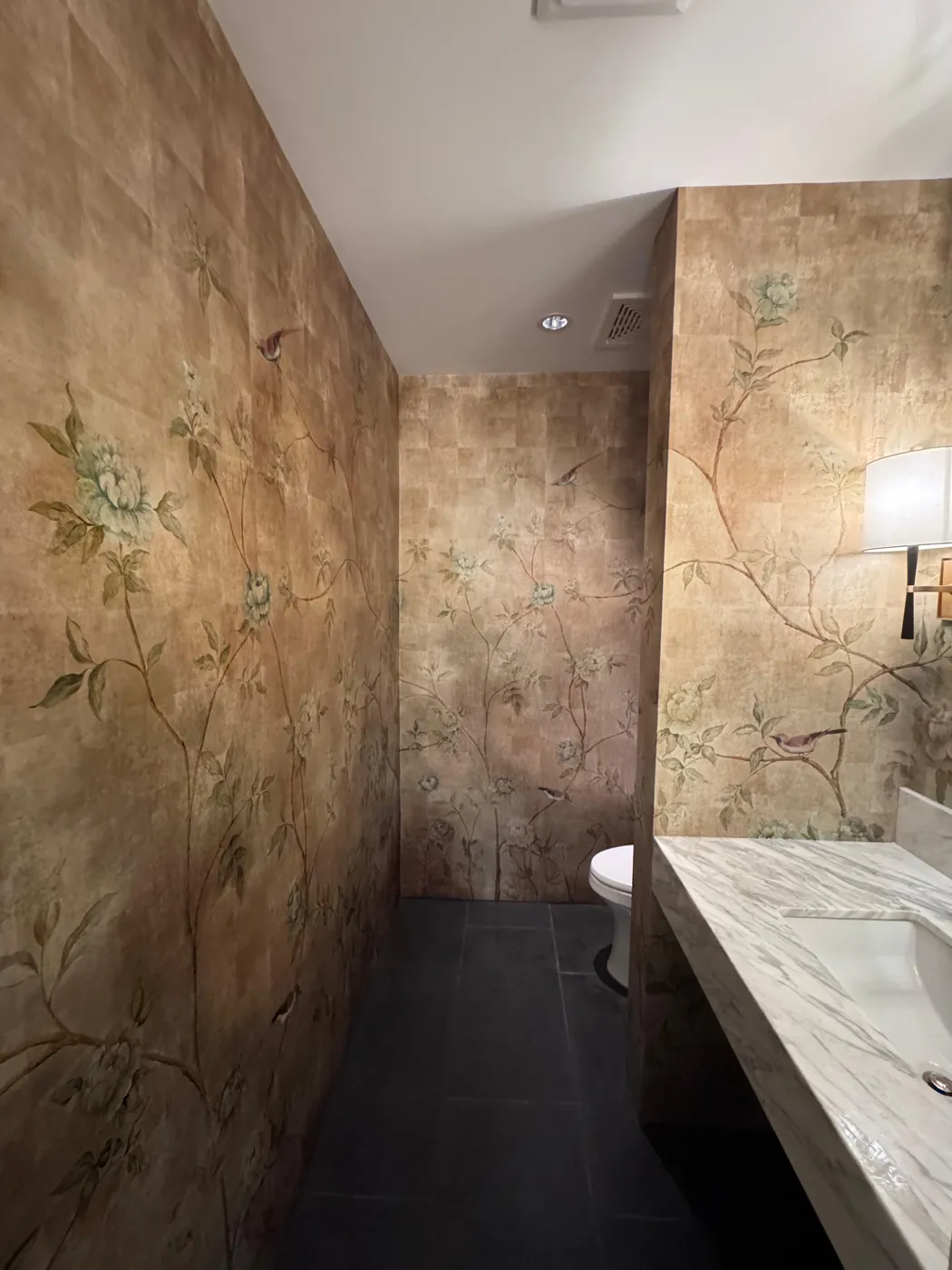
How much does wallpaper installation cost in Seattle?
It depends on your specific walls, paper, and prep, so a reliable price comes only from a written estimate for your project. Two rooms with the same square footage can take very different amounts of work. A bedroom accent wall in a newer Redmond or Sammamish home with smooth, primed drywall is a very different job from a stairwell in a 1920s Seattle house with cracked plaster and three layers of old paper.
What we can do is explain the factors that move the number up or down. Once you understand them, you can compare quotes fairly and avoid surprises halfway through the job.
What factors affect wallpaper installation cost?
The biggest factors are wall area and roll count, pattern repeat, material type, wall condition, old wallpaper removal, height and access, site conditions, and commercial scheduling. Each is explained below.
Wall area and roll count
The starting point is the total area to be covered, minus large openings like doors and windows. From there, the installer works out how many rolls are needed. Roll sizes vary by manufacturer and country of origin, so always check the usable coverage printed on the label rather than assuming a standard size. Some installers base labor on the number of rolls hung, so roll count matters for both your material order and your labor quote.
Room shape also counts. Lots of corners, windows, built-ins, outlets, and soffits mean more cuts and more time per roll, even in a small space like a powder room.
Pattern repeat and waste
Patterns repeat at a set vertical distance, and every strip has to line up with its neighbor. The larger the repeat, the more paper gets trimmed off to keep the match, which means more rolls for the same wall. Our guide to wallpaper pattern matching covers repeats and roll counts in detail. Match type matters too:
- Random match: no alignment needed, so waste is lowest.
- Straight match: the design lines up horizontally strip to strip.
- Half-drop match: every other strip is offset by half the repeat, which usually creates more waste and slower layout.
Material type
Non-woven wallpaper is often the most straightforward to hang because many products are paste-the-wall and dimensionally stable. Traditional paper and pre-pasted products need booking or relaxing time according to the manufacturer's instructions. Vinyl varies widely; commercial Type I and Type II vinyls are heavier, often wider, and may require double-cut seams and a heavier adhesive. Type II is the more durable class, typically chosen for higher-traffic areas like corridors.
Grasscloth and other natural fibers are slower and less forgiving: paste can stain the surface, seams are visible by nature, and color varies from panel to panel, so careful panel sequencing is part of the job. Murals must be hung in exact panel order and centered on the wall, which puts more time into layout and measuring; see our guide to mural wallpaper installation.
Wall condition and surface prep
Wallpaper shows every flaw underneath it. Holes, dents, cracks, texture, and glossy paint may all need attention before the first strip goes up. Typical prep includes patching, skim coating textured walls, sanding, and applying a primer designed for wallcoverings. Older Seattle homes with plaster often need crack repair, while newer Eastside construction may have orange-peel texture that should be smoothed. Our guide to wall prep before wallpaper explains what each step involves.
Removing old wallpaper
Hanging new paper over old is rarely a good idea, so removal is often part of the project. How long it takes depends on what is already there. Strippable papers come off fairly cleanly; traditional papers may need scoring, soaking, and scraping; and paper that was painted over or hung on unprimed drywall can tear the drywall facing, which then needs repair and sealing. Learn more in our wallpaper removal guide.
Ceilings, stairwells, and high walls
Height adds time and equipment. Ceilings are slower to hang than walls, and two-story entries or stairwells may require planks, scaffolding, or extension ladders set up safely over steps. Our article on ceiling wallpaper installation explains the extra steps.
Furniture, access, and site conditions
Installers need clear access to the walls. If furniture, artwork, and wall-mounted TVs have to be moved, or floors need extra protection, that is added time. Parking and condo elevator access can also affect the schedule.
Commercial scheduling
Offices, restaurants, hotels, and retail spaces often need work done after hours or on weekends so the business can stay open. Phased work and building rules also affect labor planning. Our commercial wallpaper installation guide covers this in more depth.
Wallpaper installation cost factors at a glance
In short, flat walls in good condition with a random-match paper keep labor down, while complex rooms, demanding materials, and heavy prep push it up.
| Factor | Tends to lower labor | Tends to raise labor |
|---|---|---|
| Wall area | Single accent wall | Whole rooms, multiple rooms |
| Room layout | Flat walls, few openings | Many corners, windows, outlets, built-ins |
| Pattern match | Random or small repeat | Large repeat or half-drop match |
| Material | Standard non-woven | Grasscloth, silk, murals, heavy commercial vinyl |
| Wall condition | Smooth, sound, primed | Texture, cracks, damaged drywall or plaster |
| Existing paper | None, or strippable | Multiple layers or painted-over paper |
| Height and access | Standard ceiling height | Ceilings, stairwells, two-story walls |
| Scheduling | Regular business hours | After-hours or phased commercial work |
How do wallpaper installers price their work?
Wallpaper installers usually price per roll, per square foot or yard, by the hour, or as a fixed project total. Comparing quotes is easier when you know which method you are looking at:
- Per roll: labor is tied to the number of rolls hung, sometimes with different rates for different material types.
- Per area: labor is based on square footage or, for some commercial goods, on yardage.
- Hourly: common for repairs, removal, or jobs where the work is hard to predict.
- Per project: one total price for a defined scope, which is easiest to budget.
Many installers also have a minimum charge for small jobs, since setup and travel take time no matter how small the wall. Whatever the method, make sure the quote states what is included: prep, primer, removal, materials, cleanup, and furniture moving.
How do you get an accurate wallpaper installation estimate?
Share your paper details, wall measurements, photos, and access notes, then ask for an itemized quote that separates removal, prep, and installation.
- Choose your wallpaper first, or at least narrow it to a few options. Share the brand, product name, roll size, and pattern repeat.
- Measure each wall (width and height) and note doors, windows, and built-ins.
- Take clear photos of the walls, including close-ups of texture, damage, or existing paper.
- Mention access details: ceiling height, stairwells, furniture, parking, and building rules.
- Ask for an itemized quote and confirm how many rolls to order. Our guide on how to choose a wallpaper installer shows what a strong estimate includes.
- Allow for an on-site check when walls are older or the scope is unclear, so the final price reflects reality.
When you are ready, you can request a free estimate and we will reply within 24 hours. We work across the region, including Seattle, Bellevue, Kirkland, Redmond, Mercer Island, and Sammamish.
Frequently asked questions
Is wallpaper installation priced per roll or per square foot?
Both methods are common. Some installers charge per roll hung, while others price by square footage or by the whole project. Commercial wallcoverings are sometimes figured by yardage. None is better by default; what matters is that the quote clearly states the method and lists everything included, such as prep, primer, removal, and cleanup.
Why do some wallpapers need more rolls than others?
Pattern repeat and match type drive waste. A large repeat means more paper is trimmed from each strip to keep the design aligned, and half-drop matches usually waste more than straight or random matches. Roll sizes also vary by manufacturer, so always check the usable coverage on the label and confirm the roll count with your installer.
Does removing old wallpaper add to the cost?
Usually, yes, because removal is separate labor. Strippable papers come off fairly quickly, but traditional, multi-layer, or painted-over paper takes longer and can damage the wall underneath. If drywall facing tears, it needs repair and sealing before new paper goes up. An itemized estimate should list removal and repair separately.
Is grasscloth more expensive to install than regular wallpaper?
Grasscloth typically takes more time and care. It is often unpasted, the surface can stain if paste touches the front, and color naturally varies between panels, so the installer must sequence panels thoughtfully. Seams are also visible by nature. That extra handling and planning is why installation labor for natural-fiber wallcoverings is often higher.
Can I lower my wallpaper installation cost?
You can help by clearing furniture and wall items before the crew arrives, choosing a smaller repeat or random-match pattern, and wallpapering one feature wall instead of a full room. Bundling several rooms into one visit can also be more efficient. Avoid skipping wall prep, though, because poor prep can cause seams to lift or flaws to show.
How long does a written estimate take?
WallpaperCraft Pro offers free estimates and replies to quote requests within 24 hours. Sending wall measurements, photos, and your chosen wallpaper details helps us give a more accurate number quickly. For older walls or larger commercial projects, an on-site look may be needed before we can confirm the final scope and price.
Get a free wallpaper installation estimate
Planning a project in Seattle, Bellevue, or elsewhere on the Eastside? WallpaperCraft Pro, based in Bellevue, WA, provides free, written estimates for residential and commercial wallpaper installation, removal, and wall prep. Call (213) 645-9101 or request a quote at wallpapercraftpro.com, and we will get back to you within 24 hours.