
Yes, wallpaper for bathrooms, powder rooms and laundry rooms works well in the Pacific Northwest when you choose a moisture-tolerant material and the room has a working exhaust fan. Solid vinyl and quality non-woven wallcoverings, hung over a mildew-resistant wallcovering primer with the manufacturer's recommended adhesive, hold up best, while grasscloth, silk and uncoated papers belong in powder rooms without a shower. WallpaperCraft Pro, based in Bellevue, WA, installs humid-room wallpaper across Seattle and the Eastside.
Key takeaways
- Humidity, not water splashes alone, is what usually ruins bathroom wallpaper. Ventilation matters as much as the material.
- Solid vinyl, coated (scrubbable) papers and non-woven wallcoverings are the safest choices for full bathrooms and laundry rooms.
- Powder rooms have no shower steam, so they are the ideal place for bold patterns, designer papers and even grasscloth.
- A wallcovering primer with mildew resistance and a mildew-inhibiting adhesive are the foundation of a long-lasting job.
- Keep wallpaper out of direct water zones and seal exposed edges around sinks, backsplashes and tubs.
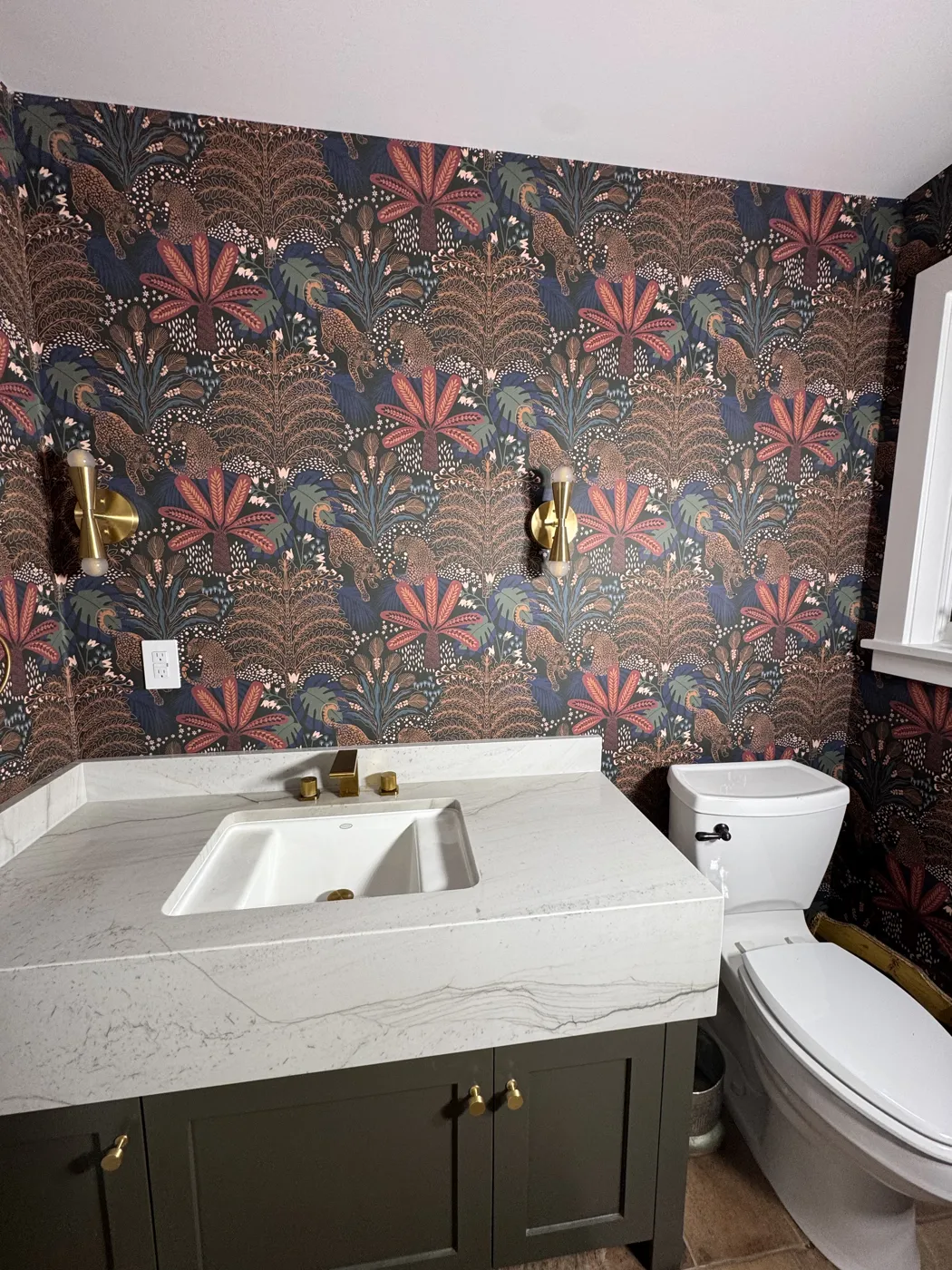
Is wallpaper for bathrooms a good idea in a damp climate?
It can be a great idea. Bathroom wallpaper adds pattern and personality to a small room in a way paint rarely does. The catch in the Pacific Northwest is our long, damp season: walls dry slowly, and a steamy bathroom gets little help from the outdoor air. When bathroom wallpaper fails, moisture has usually worked into seams or behind panels, softening the adhesive so edges lift or mildew forms.
The right material, careful prep and a working exhaust fan solve most of the problem, whether your walls are plaster in an older Seattle house or drywall in a newer Redmond or Issaquah home.
Which wallpaper materials hold up best in humid rooms?
Solid vinyl and non-woven wallcoverings hold up best in steamy rooms; natural fibers and uncoated papers hold up worst.
| Material | Moisture tolerance | Cleanability | Best fit |
|---|---|---|---|
| Solid vinyl | High; surface sheds water and steam | Scrubbable in most cases | Full bathrooms, laundry rooms, kids' baths |
| Coated paper / vinyl-coated | Moderate; thin protective coating | Wipeable, not scrubbable | Lightly used guest baths, powder rooms |
| Non-woven | Good; dimensionally stable and breathable | Wipeable; many are washable | Bathrooms with good ventilation, laundry rooms |
| Uncoated traditional paper | Low; can stain, swell or bubble | Dust only | Powder rooms with no shower |
| Grasscloth and natural fibers | Low; water can spot or stain fibers | Dust or vacuum only | Powder rooms away from the sink |
| Silk, flocked and specialty papers | Low; delicate surfaces | Very limited | Powder rooms and decorative accent walls |
Always check the spec sheet. Ratings like "washable" and "scrubbable" are more reliable than how a sample feels in your hand. Peel-and-stick adhesive can lose grip in steam, so read our peel and stick vs traditional wallpaper comparison before using it in a full bath.
Vinyl vs non-woven: which is better for a bathroom?
Both work well. Solid vinyl gives the toughest, most cleanable surface, which is why it is popular for family bathrooms and laundry rooms. Because vinyl does not breathe, though, it relies on good prep and a mildew-resistant adhesive so moisture is not trapped behind it, especially on exterior walls that run cool and damp. Non-woven wallcoverings are breathable and stay dimensionally stable when wet, so seams are less likely to shrink or open.
Why does ventilation matter so much?
Ventilation matters because lingering steam softens adhesive and feeds mildew behind the paper, no matter how tough the surface is. Before you invest in wallpaper for a full bath, make sure you have:
- An exhaust fan that is vented to the outside (not into the attic) and sized for the room.
- A habit of running the fan during showers and until the mirror clears. A timer or humidity-sensing fan makes this automatic.
- No existing mildew, peeling paint or soft drywall. These are signs of an ongoing moisture problem that wallpaper will not fix.
A poorly vented dryer can make a laundry room as humid as a bathroom.
How should walls be prepped for wallpaper in a bathroom?
Bathroom walls should be repaired, smoothed and sealed with a mildew-resistant wallcovering primer before any paper goes up. A typical sequence:
- Inspect and repair. Fix cracks and damaged drywall or plaster, and treat any mildew first.
- Remove old wallcoverings. New paper over old invites bubbles and lifting (see our wallpaper removal guide).
- Smooth the surface. Skim coat and sand textured or uneven walls so the new material bonds evenly.
- Prime with a wallcovering primer, ideally mildew resistant. It seals the wall, improves adhesion and eases future removal.
- Choose the right adhesive. Use the paste the wallcovering manufacturer recommends; for humid rooms that is often a clear, premixed adhesive with a mildew inhibitor. Follow the stated booking or relaxing time for paste-the-paper products.
- Hang, match and seal. Tight seams, careful trimming around fixtures and sealed edges in splash zones finish the job.
For a deeper look at repairs, skim coating and primers, see our guide to wall prep before wallpaper.
How do you protect wallpaper around sinks, tubs and toilets?
Protect wallpaper near fixtures by stopping it short of direct water, adding a backsplash and sealing exposed edges. The details that matter most:
- Keep paper out of direct water zones. Inside a shower surround or behind a tub faucet, tile or another waterproof surface is the right choice. Wallpaper can stop at the tile line.
- Use a backsplash behind the sink. Even a short tile or stone backsplash keeps splashes off the wallpaper edge.
- Seal exposed edges. Where wallpaper meets a backsplash, vanity top or tub deck, a thin bead of clear, mildew-resistant caulk helps stop water from wicking under the edge.
- Trim cleanly around plumbing so no loose edges catch moisture.
- Let it cure. Adhesive needs time to dry fully. Follow the manufacturer's guidance, and keep showers short with the fan running for the first few days after installation.
Why are powder rooms the perfect statement space?
Powder rooms are ideal for bold wallpaper because they have no shower steam and very little wall area. That frees you to choose almost any wallcovering, including large-scale murals, dramatic dark patterns, metallics and even grasscloth and designer papers. Because the room is small, a premium paper often takes only a few rolls.
Powder rooms are tricky to hang well, though. Many corners, a vanity, a mirror and plumbing all interrupt the pattern, and straight-match or half-drop designs need planning so the motif lands well at the most visible corner (our guide to wallpaper pattern matching explains the match types). That is why many homeowners working with a wallpaper installer in Bellevue, Kirkland or Edmonds start with a bold powder room: high impact, small square footage.
What should Seattle-area homeowners know before papering a bathroom?
The age of the house and the location of the room change the prep and the material choice:
- Older Seattle and Tacoma homes often have plaster with hairline cracks, old wallpaper layers or oil-based paint, all of which need repair and the right primer first.
- Newer Eastside builds usually have textured drywall. A skim coat gives a cleaner result, especially with thin or shiny papers.
- Exterior bathroom walls run cooler and can collect condensation in winter, so breathable non-woven materials and good fan habits help.
- Basement laundry rooms may stay humid year-round, making durable vinyl the practical pick.
How do you maintain bathroom wallpaper?
Maintain bathroom wallpaper by controlling steam, wiping splashes quickly and checking edges near water:
- Run the exhaust fan every time you shower, and leave the door open afterward when you can.
- Wipe splashes promptly with a soft, damp cloth. Use mild soap only on washable or scrubbable products.
- Check seams and edges near the sink and tub a few times a year; a small lifted edge can usually be re-adhered early.
- Watch for dark spots or a musty smell, which can signal trapped moisture.
Installed thoughtfully, bathroom wallpaper can look sharp for many years; see how long wallpaper lasts for more on lifespan and repairs. Our free estimate includes a look at your room's ventilation, wall condition and the materials that fit it.
Frequently asked questions
Can you put wallpaper in a bathroom with a shower?
Yes, if the room has a working exhaust fan vented outside and you choose a moisture-tolerant material such as solid vinyl or a quality non-woven wallcovering. Keep the wallpaper out of the shower itself and stop it at the tile line. A mildew-resistant primer and adhesive, plus sealed edges near water, help it last.
What is the best type of wallpaper for a humid bathroom?
Solid vinyl is the most durable and cleanable option for full bathrooms and laundry rooms. Non-woven wallcoverings are also a strong choice because they are breathable and stay stable when humidity changes. Uncoated papers, grasscloth and silk are better saved for powder rooms. Always check the manufacturer's rating for washability and moisture resistance.
Can grasscloth be used in a bathroom?
Grasscloth is best kept to powder rooms with no shower, and ideally away from the area directly around the sink. Natural fibers absorb water, so splashes can leave permanent spots or color changes, and steam can loosen the backing. If you love the look in a full bath, consider a vinyl wallcovering that imitates grasscloth texture.
Will wallpaper peel in a Pacific Northwest bathroom?
It should not if the job is done correctly. Peeling usually comes from poor ventilation, skipped primer, the wrong adhesive or unsealed edges near water. In our damp climate, running the exhaust fan consistently and choosing a moisture-tolerant material make the biggest difference. A small lifted seam can usually be re-adhered if caught early.
Is wallpaper a good idea for a laundry room?
Yes. Laundry rooms are a fun place for pattern, and durable vinyl or non-woven wallcoverings handle the humidity and occasional scuffs well. Make sure the dryer vents fully to the outside and the room has some airflow. Washable or scrubbable products are worth choosing because laundry rooms tend to collect lint, dust and splashes.
How long should I wait to shower after bathroom wallpaper is installed?
Follow the adhesive and wallcovering manufacturer's guidance, since drying times vary with the product and room conditions. As a general rule, it helps to keep showers short and run the exhaust fan for the first few days so the paste can cure fully. Your installer can give specific advice for the materials used in your room.
Planning wallpaper for a bathroom or powder room?
WallpaperCraft Pro installs wallpaper in bathrooms, powder rooms and laundry rooms across Seattle, Bellevue and the greater Puget Sound area, with full surface prep and moisture-smart material advice. Request a free estimate and get a quote reply within 24 hours. Call (213) 645-9101 or visit wallpapercraftpro.com.