
Wallpaper pattern matching is how each new strip lines up with the one beside it so the design flows across the seams; the main match types are straight (set), half-drop and random (free), and some papers are reverse-hung. The match type and the length of the pattern repeat decide how much paper you waste, how many rolls you need and how carefully the room has to be planned. WallpaperCraft Pro, a wallpaper installer based in Bellevue, WA, works out roll counts, seams and kill points before hanging patterned papers in homes across Seattle and the Eastside.
Key takeaways
- The pattern repeat is the vertical distance before the design starts over. Larger repeats usually mean more waste.
- Straight match lines the design up at the same height on every strip. Half-drop shifts every other strip down by half the repeat. Random match needs no alignment.
- Roll count depends on wall height, roll size, and the repeat, not just square footage.
- Every room that wraps all the way around ends with one mismatched seam, called the "kill point." Plan it for a corner behind a door or another low-visibility spot.
- Buy every roll from the same batch (dye lot) so the color matches from strip to strip.
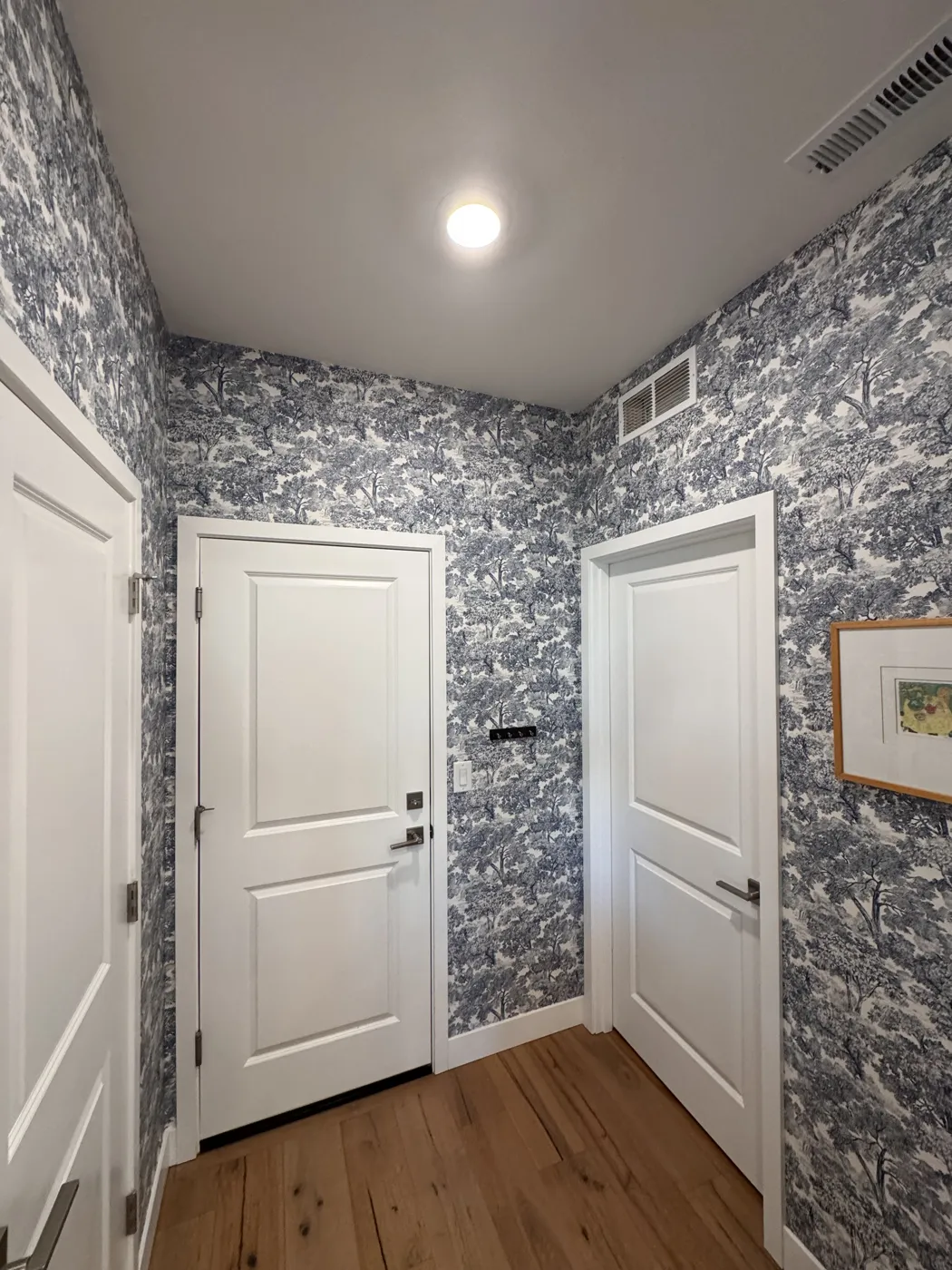
What is wallpaper pattern matching?
Wallpaper pattern matching is the alignment of each strip with its neighbor so the printed design continues across the seam without a visible jump. A printed wallpaper is a long ribbon of design that repeats at a fixed interval, and on bold prints even a small alignment error stands out.
The match type and repeat length are printed on the roll label or product specs; read both before you order. Large-format murals are different: they are printed as numbered panels that form one image, as explained in our mural wallpaper installation guide.
What does "pattern repeat" mean?
The pattern repeat (sometimes called vertical repeat) is the distance from one point in the design to the same point further down the roll. A small print might repeat every few inches. A large botanical or damask can repeat every two feet or more.
Straight match vs half drop vs random: what's the difference?
A straight match lines the design up at the same height on every strip, a half-drop shifts every other strip down by half the repeat, and a random match needs no alignment. Here is how they compare in practice:
| Match type | How it lines up | Typical waste | Planning difficulty |
|---|---|---|---|
| Random / free match | No alignment needed | Lowest | Low |
| Straight (set) match | Design meets at the same height across every seam | Moderate. Rises with repeat length. | Moderate |
| Half-drop match | Each strip drops half a repeat; design runs diagonally | Can be higher, especially with large repeats | Higher |
| Multiple drop (e.g. quarter drop) | Each strip drops a fraction of the repeat | Varies | High |
| Reverse hang | Every other strip flipped 180 degrees | Low | Low to moderate |
Straight (set) match
A motif touching the right edge of one strip sits at exactly the same height on the left edge of the next. Every strip starts at the same point in the pattern. Waste comes from skipping ahead on the roll to reach that point.
Half-drop match
The matching point on each new strip is half a repeat lower, so strips alternate between two "starts" and the design flows on a diagonal. Many installers cut from two rolls at once, alternating between them, to help reduce waste.
Random (free) match and reverse hanging
Random-match papers need no alignment, so strips are cut back-to-back with little waste. Some plains and textures are labeled to reverse-hang (flip every other strip) to even out slight edge-to-edge shading. Grasscloth also varies between panels, as covered in our grasscloth and designer wallpaper guide. Always follow the hanging direction arrows on the label.
How does the match type affect how many rolls of wallpaper you need?
Square footage alone doesn't answer "how many rolls of wallpaper." What matters is how many full-height strips each roll yields, and the pattern repeat controls that. Here's the general logic professionals use:
- Measure wall height and add a trimming allowance at the top and bottom (manufacturers and installers typically add a few inches).
- Adjust for the repeat. For a matched paper, each strip has to start at the same point in the pattern. In practice, each strip uses up the wall height rounded up to the next full repeat. A 4-inch repeat adds little. A 25-inch repeat can add a lot.
- Find strips per roll. Divide the usable roll length by that adjusted strip length and round down. A partial strip can't cover a full-height wall.
- Count strips needed. Divide the total width of the walls you're covering by the roll width and round up. Subtract only large openings.
- Divide strips needed by strips per roll and round up. Then add extra for mistakes, future repairs, and matching around obstacles.
Two papers with identical roll sizes can need different quantities for the same room because their repeats differ. That's why pattern repeat is one of the factors that affect wallpaper installation cost: more rolls, more cutting time, and more planning. Roll sizes vary by brand and region, so work from the actual label.
Where should wallpaper start and finish in a room?
Start and finish at the kill point, the one seam where the pattern cannot match, and hide it in a low-visibility spot. If you paper all four walls, the last strip meets the first and the pattern almost never lines up cleanly.
Good installers decide where the kill point goes before cutting the first strip:
- Behind the entry door, in the corner the door covers when it's open.
- Above a door, where the strip is short.
- In a corner hidden by built-ins, drapes, or furniture.
Installation then starts next to the kill point and works around the room, or starts at the focal wall and works outward, ending at the kill point. Each strip is hung to a plumb line, not the corner, because few corners are truly vertical. That's especially true in older Seattle and Tacoma homes with settled plaster walls. Newer drywall homes in Redmond or Sammamish tend to be straighter, but checking plumb is still standard. Badly out-of-plumb or damaged walls may need repair first; see our guide to wall preparation for wallpaper.
How do you center a pattern on a focal wall?
Mark the wall's centerline and plan outward from it, because people look at the center of an accent wall first:
- Center a strip or center a seam. Mark the centerline and test both layouts. Pick the one that leaves similar, reasonably wide partial strips at each corner, not narrow slivers.
- Center the motif on a feature, such as a medallion over a headboard or mantel.
- Set the vertical position. The ceiling line is usually the most visible edge, so installers often place a full motif just below it and let the cut-off fall at the baseboard.
With uneven ceilings, a strong horizontal motif can appear to "drift" along the top edge. Small-scale or random-match designs are more forgiving. The same centering logic applies overhead, as covered in our guide to papering a ceiling.
Why do dye lots and batch numbers matter?
All rolls for one room should share a batch number, because color can shift slightly between print runs. Each roll carries a batch or run number (the dye lot). Rolls from different batches can look identical in the box yet differ side by side on a wall.
- Order every roll you need, plus extras, at the same time so they come from one batch.
- Check the batch number on every roll before cutting.
- Keep the label and at least one spare roll for future repairs.
These habits prevent the classic surprise of running short and finding the reorder doesn't match. For the full sequence from measuring to final trim, read our step-by-step wallpaper installation guide, or see how we work as a wallpaper installer in Bellevue.
Frequently asked questions
What is the difference between straight match and half drop wallpaper?
With a straight match, the design lines up at the same height on both sides of every seam, so each strip starts at the same point in the pattern. With a half drop, each strip is shifted down by half the pattern repeat compared with the one before it. That creates a diagonal flow and usually takes more careful cutting and planning.
Does a bigger pattern repeat mean I need more wallpaper?
Usually, yes. Each matched strip has to start at the same point in the design, so you often skip part of the roll to reach the next matching point. A large repeat means more paper is trimmed off per strip and fewer full strips come out of each roll. Small repeats and random-match papers waste much less.
What is a kill point in wallpapering?
The kill point is the final seam in a room where the last strip meets the first, and the pattern can't match perfectly. Installers plan it ahead of time and place it in a low-visibility spot, such as a corner behind the entry door, above a doorway, or behind tall furniture, so the mismatch isn't noticeable.
What does reverse hang mean on a wallpaper label?
Reverse hang means every other strip is turned upside down (rotated 180 degrees) before hanging. It's used on some plain, textured, and natural-fiber wallcoverings to balance slight color or shading differences from one edge of the roll to the other. Only reverse-hang when the manufacturer's instructions call for it.
Why should all my wallpaper rolls have the same batch number?
Wallpaper is printed in runs, and color can vary slightly between them. Rolls with different batch (dye lot) numbers may show a visible shade change when hung side by side. Buy all the rolls you need, plus extras, in one order, and check that every label shows the same batch number before cutting.
How many extra rolls of wallpaper should I order?
There's no single number. It depends on the pattern repeat, the room's layout, and how many windows, doors, and corners need matching. Many people order at least one extra roll beyond the calculated amount, and more for large repeats. An installer can measure the room and calculate the quantity for your specific paper before you buy.
Get your pattern planned before the first cut
WallpaperCraft Pro measures your room, works out the roll count for your specific pattern repeat, and plans seams and kill points so the finished wall looks seamless. Based in Bellevue, WA, we serve 22 cities across Seattle, the Eastside, Snohomish County and the South Sound. Request a free estimate and get a quote reply within 24 hours. Call (213) 645-9101 or visit wallpapercraftpro.com.