
Commercial wallpaper installation is the professional hanging of durable, code-conscious wallcoverings, most often Type I or Type II vinyl, in offices, hotels, restaurants, retail stores, clinics, and multifamily buildings. A good commercial job comes down to three things: choosing the right durability class for the traffic, preparing the walls properly, and scheduling the work around business hours or the general contractor's timeline. WallpaperCraft Pro, based in Bellevue, WA, installs commercial wallcoverings with after-hours and phased scheduling in 22 cities from Everett to Tacoma.
Key takeaways
- Type I vinyl suits low-traffic areas like private offices and guest rooms; Type II is the usual choice for corridors, lobbies, and dining rooms.
- Commercial vinyl usually comes as wide goods (roughly 52 to 54 inches) and is commonly installed with double-cut seams for tight, nearly invisible joints.
- Check the fire rating and any spec requirements with your designer, architect, or GC before ordering material.
- After-hours, weekend, and phased scheduling keep businesses open while walls get finished.
- Submittals, samples, and a test panel or mockup prevent costly surprises on larger projects.
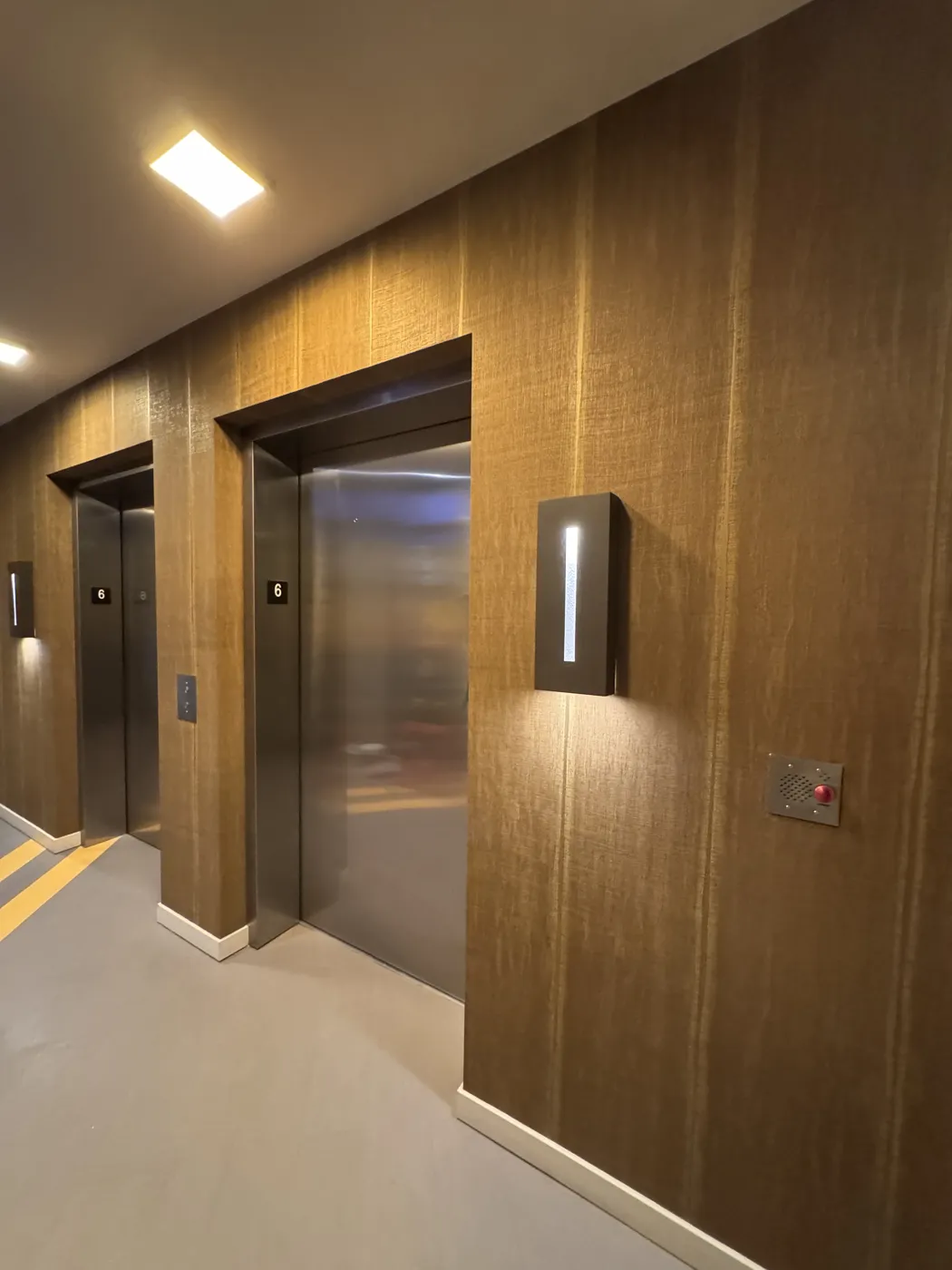
What is commercial wallpaper installation?
Commercial wallpaper installation covers wallcoverings in spaces the public or employees use every day: office suites, hotel corridors and guest rooms, restaurants, retail stores, medical and dental clinics, and the common areas of apartment and condo buildings. Compared with home projects, it usually means heavier materials, larger areas, stricter specs, and tighter schedules.
Around Puget Sound, that ranges from office tenant improvements to hotel corridors, restaurant feature walls, and apartment amenity spaces. The goal is walls that look sharp, hold up, clean easily, and get finished without disrupting business. You can see the commercial services we offer on our commercial wallpaper page.
Type I vs Type II vinyl: which one does your space need?
Type I is light-duty commercial vinyl for low-traffic rooms, and Type II is medium-duty vinyl for corridors, lobbies, and other busy public spaces. These durability classes come from a former federal wallcovering specification and are still the everyday shorthand in commercial specs; ASTM F793 is a related industry classification by use. Type III, a heavier class, is sometimes specified for very high-impact areas.
| Feature | Type I (light duty) | Type II (medium duty) |
|---|---|---|
| Weight and thickness | Lighter, thinner vinyl layer | Heavier, thicker vinyl layer |
| Typical areas | Private offices, conference rooms, hotel guest rooms, low-traffic walls | Corridors, lobbies, restaurants, retail floors, clinic hallways, elevator lobbies |
| Scuff and impact resistance | Good for occasional contact | Better resistance to carts, luggage, chairs, and bags |
| Cleanability | Washable | Washable and generally more scrub resistant |
| Material cost | Usually lower | Usually higher |
| Handling | Easier to hang | Heavier rolls that need careful handling and adhesive choice |
A common approach is to mix them: Type II in high-traffic corridors and public areas, and Type I in private offices or guest rooms where walls take less abuse. Always confirm the exact product's performance data and fire rating with the manufacturer, and check what your designer, architect, or building code requires. Many commercial specs call for a Class A flame-spread rating, and the rating applies to the tested assembly, so follow the manufacturer's instructions on substrate and adhesive.
How durable and cleanable are commercial wallcoverings?
Commercial vinyl is built for daily contact and regular wiping, so it usually outlasts painted walls in busy spaces. Fingerprints, chair scuffs, and splashes can usually be wiped away without the burnished spots flat paint shows.
A few factors affect how well walls hold up over time:
- Durability class: Matching Type I or Type II to traffic levels is the biggest decision.
- Seams: Wide commercial goods are often double-cut so seams sit tight and are less likely to lift at outside corners and high-touch spots.
- Corner protection: In busy corridors, corner guards and chair rails protect the wallcovering from carts and furniture.
- Prep and primer: A properly prepared wall with a wallcovering primer gives good adhesion now and makes future removal much easier. Our wall preparation for wallpaper guide covers repairs, skim coats, and primer choice.
- Moisture: In our damp Pacific Northwest climate, kitchens, restrooms, and spaces near exterior doors need attention to ventilation and wall condition before hanging.
How do you plan commercial wallpaper installation around business hours?
Plan commercial wallpaper installation for after hours, weekends, or in phases so the business stays open, and lock in the schedule before material is ordered. Here is how a typical commercial project comes together:
- Site walk and measurements: We review wall areas, ceiling heights, access, existing wall condition, and any specifications or drawings.
- Material confirmation: We confirm the product, durability class, roll width, pattern repeat and match type, and fire rating, and order enough from a single run or dye lot.
- Submittals and samples: Product data, samples, and installation instructions go to the designer, owner, or GC for approval.
- Schedule and phasing: We agree on work windows, such as nights, weekends, or one floor or zone at a time, plus access, parking, elevator use, and staging space.
- Surface prep: Old wallcovering removal (our wallpaper removal guide explains the process), patching, skim coating, sanding, and priming with a wallcovering primer.
- Installation: Hanging, pattern matching, double-cutting seams where appropriate, and trimming around fixtures, outlets, and trim.
- Cleanup and walkthrough: The space is left ready for business, and we walk the job with you or your punch-list contact.
Working with general contractors
On new construction and tenant improvements, wallcovering is a finish trade that comes late in the job. That means drywall, paint, and most messy trades should be complete, the building should be closed in, and HVAC should be running so temperature and humidity are stable. Many manufacturers specify environmental conditions for installation, and we follow them. Clear communication with the GC about sequencing, outlet covers, and base trim helps avoid rework.
Why do submittals, samples, and mockups matter?
On larger commercial projects, submittals are the paper trail that confirms everyone agreed on the same product. A typical package includes the product data sheet, the fire rating documentation, a physical sample, and the manufacturer's installation instructions.
For high-visibility spaces such as a hotel lobby or a brand feature wall, a small mockup or test panel is worth the time. It shows how the seams, pattern repeat, and color look under the actual lighting before the whole space is covered.
How are large-format murals and brand walls installed in a business?
Custom murals and brand walls are printed in panels to the measured wall, so the order is measure, approve a proof, print, then hang. Many businesses use them to tell their brand story: a logo wall at reception, a full-height mural in a restaurant, or a custom graphic in a retail store or office break room. Panels must line up perfectly, so plan for:
- Accurate field measurements before printing, including outlets, windows, and trim.
- Agreement on bleed (extra image at the edges) so the design can be trimmed cleanly.
- Checking the panel layout so key elements such as faces, logos, or text do not fall on a seam or behind furniture.
- A smooth, uniform wall surface, since large images show every bump and patch.
Learn more in our guide to mural wallpaper installation.
What affects the cost of a commercial wallpaper project?
Every commercial job is different, so pricing depends on the details. The main cost factors include total wall area, the number of rolls or panels, the material type and durability class, pattern repeat, existing wall condition, removal and prep needs, ceiling heights and lift or scaffold access, and scheduling requirements like nights, weekends, or phased work. The best way to budget is a free written estimate based on a site visit. For a deeper look, see our article on what affects wallpaper installation cost.
Is your commercial project in Seattle or on the Eastside?
This guide covers commercial wallcovering in general; our local pages add the details that change by area. For downtown and urban Seattle restaurants, retail, offices, and hotels, read planning commercial wallpaper in Seattle. For Eastside office parks, medical and dental clinics, multifamily buildings, and builder model homes, see Bellevue offices, clinics, and multifamily projects. Every city we cover is listed on our service areas page.
How should you maintain commercial wallpaper?
Clean commercial wallpaper gently and often, follow the manufacturer's care guide, and keep spare rolls for repairs. A few simple habits keep walls looking good:
- Wipe marks early with a soft cloth and mild soap and water, then rinse and dry.
- Follow the manufacturer's cleaning guide and avoid harsh solvents or abrasive pads unless they are approved for the product.
- Keep a few spare rolls or panels from the same run for future repairs.
- Repair lifted seams or damaged sections promptly before they spread.
Frequently asked questions
What is the difference between Type I and Type II wallcovering?
Type I is a lighter-duty commercial vinyl suited to low-traffic spaces like private offices and hotel guest rooms. Type II is heavier and more resistant to scuffs and impacts, which makes it the usual choice for corridors, lobbies, restaurants, and retail floors. Both are washable, but Type II generally stands up better to frequent scrubbing and contact.
Can you install wallpaper after business hours?
Yes. WallpaperCraft Pro offers after-hours, weekend, and phased scheduling for commercial clients so offices, stores, restaurants, and clinics can stay open. We plan work windows, access, and staging with you or your building manager ahead of time and leave the space clean and ready for business each morning.
Do you work with general contractors and designers?
Yes. We coordinate with general contractors, designers, and property managers on schedules, submittals, and samples. On construction projects, wallcovering is a finish trade, so we plan our work after drywall and paint are complete and the space has stable temperature and humidity, following the manufacturer's installation requirements.
What fire rating does commercial wallpaper need?
Requirements depend on the building type, the location within the building, and local code. Many commercial specifications call for a Class A flame-spread rating. Check with your architect, designer, or code official, and confirm that the product's documentation matches the substrate and adhesive being used.
Which Puget Sound areas do you serve for commercial projects?
We serve businesses across 22 cities in Washington, including Seattle, Bellevue, Redmond, Kirkland, Renton, Everett, and Tacoma. Based in Bellevue, we handle offices, hotels, restaurants, retail stores, clinics, and multifamily buildings throughout the Eastside, Seattle, and nearby King, Snohomish, and Pierce County communities. Our service areas page lists every city.
How do I get a quote for a commercial wallcovering project?
Call (213) 645-9101, email wallpapercraftpro@gmail.com, or fill out the form at wallpapercraftpro.com. Share drawings, specs, wall measurements, or photos if you have them. Estimates are free, and we reply to quote requests within 24 hours. For larger projects, we usually schedule a site walk first.
Get a free commercial wallpaper estimate
Planning an office, hotel, restaurant, retail, or multifamily project anywhere from Seattle to Tacoma? WallpaperCraft Pro offers free estimates and replies within 24 hours. Call (213) 645-9101 or visit wallpapercraftpro.com to request your quote.